
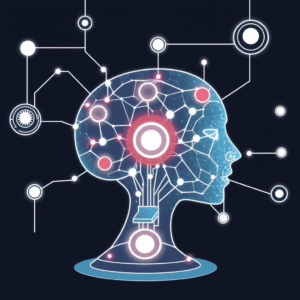
Technology, in its myriad forms, is more than just a collection of tools or gadgets; it is the fundamental force reshaping human civilization. From the simplest lever to the most sophisticated artificial intelligence, technological innovation has consistently redefined our capabilities, perceptions, and interactions with the world. This article will delve into technology’s profound journey, exploring its transformative impact on society and peering into the innovative horizons that continue to evolve at an accelerating pace.
The Transformative Power of Technology: From Analog to Digital
The history of humanity is intrinsically linked to the evolution of technology. Early innovations, such as the wheel, agriculture, and metallurgy, laid the foundation for organized societies, enabling specialization and the growth of communities. The Industrial Revolution, beginning in the 18th century, marked a pivotal shift, harnessing steam power and mechanization to transform manufacturing, transportation, and urban life. This era brought about unprecedented productivity and wealth, but also introduced new societal structures and challenges, demonstrating early on that technology is a double-edged sword, capable of both elevating and disrupting.
However, the true acceleration of technological impact began in the mid-20th century with the advent of the digital age. The invention of the transistor, and subsequently integrated circuits, made computing power accessible and miniaturized, paving the way for personal computers. These machines, once relegated to specialized scientific and military applications, began to permeate homes and offices, fundamentally altering how we process information, communicate, and work. The graphical user interface and intuitive operating systems made complex computing accessible to the masses, democratizing a technology that was previously arcane.
The internet, arguably the single most transformative invention of the late 20th century, took this digital revolution to an entirely new level. Initially conceived as a robust communication network for research and defense, the World Wide Web rapidly evolved into a global, interconnected repository of information and a platform for unprecedented communication. Email revolutionized correspondence, shrinking distances and accelerating business operations. E-commerce emerged, allowing goods and services to be exchanged across geographical boundaries with ease, fundamentally altering retail and supply chains. Social media platforms, following later, transformed human interaction, creating global communities and new forms of social capital, though not without introducing complex issues of privacy and information veracity.
The proliferation of mobile technology further cemented the ubiquitous presence of digital tools in our lives. Smartphones, in particular, consolidated the functionalities of a phone, camera, computer, and GPS device into a single, pocket-sized unit. This integration provided instant access to information, communication, and entertainment, wherever and whenever. It empowered billions globally, particularly in developing nations, by providing access to banking, education, and market information that was previously out of reach. The mobile revolution transformed daily routines, blurring the lines between work and personal life, and creating an always-on culture of connectivity. From navigating unfamiliar cities to managing personal finances, mobile technology became an indispensable extension of our capabilities.
Beyond personal use, the digital transformation profoundly impacted various sectors. Healthcare embraced digital records, tele-medicine, and advanced diagnostic tools. Education saw the rise of online learning platforms and digital resources, making knowledge more accessible. Finance underwent a radical shift with digital banking, online trading, and cryptocurrencies, decentralizing traditional financial institutions. Entertainment, too, was revolutionized by streaming services, digital gaming, and virtual reality, offering immersive and on-demand experiences. This shift from analog to digital was not merely an upgrade; it was a foundational change, fundamentally restructuring economies, societies, and individual behaviors, setting the stage for the next wave of innovation.
The Horizon of Innovation: AI, Connectivity, and Ethical Imperatives
As the digital era matures, the horizon of technological innovation gleams with even more profound possibilities, primarily driven by advances in artificial intelligence (AI), ubiquitous connectivity, and emerging fields like quantum computing and biotechnology. These technologies promise to push the boundaries of what is conceivable, offering solutions to complex global challenges while simultaneously introducing new ethical and societal dilemmas that demand careful consideration.
Artificial Intelligence and Machine Learning (ML) stand at the forefront of this new wave. Unlike traditional programming, which relies on explicit instructions, AI systems, particularly those employing deep learning, can learn from vast datasets, identify intricate patterns, and make predictions or decisions with increasing autonomy. This capability is revolutionizing fields ranging from medicine, where AI assists in diagnosing diseases with remarkable accuracy and accelerates drug discovery, to finance, where it detects fraud and optimizes trading strategies. In everyday life, AI powers personalized recommendations on streaming services, intelligent voice assistants, and increasingly sophisticated autonomous vehicles. The true depth of AI’s impact lies not just in automation, but in its potential to augment human intelligence, handling tedious or complex data analysis tasks, allowing humans to focus on creativity, strategy, and empathy. However, the rise of AI also prompts critical questions about job displacement, algorithmic bias – where AI systems can perpetuate or even amplify existing societal prejudices if trained on biased data – and the ethical implications of autonomous decision-making in high-stakes environments.
Parallel to the rise of AI is the advancement of ubiquitous connectivity, spearheaded by technologies like 5G and the Internet of Things (IoT). 5G networks, with their dramatically increased speeds, lower latency, and greater capacity, are not merely faster versions of their predecessors; they are foundational infrastructure enabling real-time communication between countless devices. This high-speed, low-lag connectivity is crucial for the seamless operation of IoT ecosystems, where everyday objects – from smart home appliances and wearable health monitors to industrial sensors and municipal infrastructure – are interconnected and exchange data. The IoT promises smart cities that optimize traffic flow and energy consumption, precision agriculture that maximizes crop yields, and predictive maintenance in factories that minimizes downtime. This web of interconnected devices generates an unprecedented volume of data, which, when analyzed by AI, can unlock new insights and drive further automation and efficiency across all sectors. The societal implications, however, include significant concerns about data privacy, cybersecurity vulnerabilities inherent in such an extensive network, and the potential for surveillance.
Beyond AI and connectivity, other emerging technologies hint at even more transformative futures. Quantum computing, still in its nascent stages, holds the potential to solve computational problems that are currently intractable for even the most powerful supercomputers, with applications in materials science, drug development, and cryptography. Biotechnology, particularly advancements in gene editing technologies like CRISPR, offers the ability to precisely modify DNA, opening doors to curing genetic diseases, enhancing agricultural productivity, and even reshaping human capabilities, though these possibilities are entwined with profound ethical debates about human augmentation and the sanctity of life. Sustainable technologies, from advanced renewable energy solutions to carbon capture, are crucial in addressing climate change and ensuring a habitable planet.
As we navigate this landscape of rapid innovation, the ethical imperatives become paramount. Society faces the critical challenge of ensuring that technological progress serves humanity’s best interests, promotes inclusivity, and upholds fundamental values. This involves developing robust regulatory frameworks for data governance and AI ethics, addressing the digital divide to ensure equitable access to technology’s benefits, fostering digital literacy to empower citizens, and actively mitigating the risks of misinformation and cyber threats. The future of technology is not predetermined; it is a collaborative construct, shaped by the choices made by innovators, policymakers, and citizens alike.
Technology stands as the defining characteristic of our modern era, an ever-evolving tapestry woven from human ingenuity and ambition. From the foundational shift to digital computing and the internet’s globalization, to the current frontiers of AI and ubiquitous connectivity, its impact is undeniable. While offering unprecedented potential to solve complex challenges and enhance human life, technology also demands our vigilance, requiring us to consciously balance progress with profound ethical considerations. Our collective future hinges on embracing innovation responsibly, ensuring that technology serves as a tool for a more equitable and prosperous world.