
To set up a blog, pick a niche, choose a platform (commonly WordPress), register a domain, buy hosting, install a theme, configure essential settings/plugins, publish cornerstone posts, and promote with internal links and social channels while optimizing on‑page SEO and images.
Who this is for
Beginners launching a first blog and anyone needing a current, SEO‑friendly setup checklist.
Target keyword ideas
- how to set up a blog
- start a blog step by step
- set up WordPress blog
- blogging for beginners
Meta SEO (copy/paste)
- Meta title: How to Set Up a Blog in 10 Easy Steps (Beginner’s Guide)
- Meta description: Learn how to set up a blog the right way: niche, domain, hosting, WordPress, themes, essential settings, SEO, images, and promotion. Includes checklist and examples.
Featured image suggestion
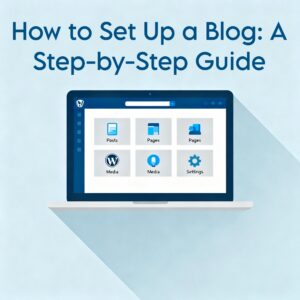
- A clean desk with a laptop showing a WordPress dashboard or blog homepage.
- Alt text: “WordPress dashboard showing a newly created blog.”
Choose your niche
- Pick a specific, sustainable topic with clear audience intent and monetization paths.
- Validate with basic keyword research: search volume, competition, and SERP types.
- Clarify positioning: who it helps, what problem it solves, and how it’s different.
Suggested image: Venn diagram of Passion × Expertise × Demand.
Alt text: “Blog niche sweet spot diagram.”
Select a platform
- WordPress.org for maximum control, plugins, and scalability.
- All‑in‑one builders (e.g., Wix, Squarespace) for speed and simplicity.
- Consider future needs: custom features, multi‑author support, portability.
Suggested image: Simple comparison graphic of platforms.
Alt text: “Blog platform comparison overview.”
Get a domain and hosting
- Domain: short, brandable, easy to spell, avoid hyphens; use .com if available.
- Hosting: choose a provider with strong uptime, SSL, backups, and support.
- Connect domain to host and enable free SSL before launch.
Suggested image: Screenshot of DNS settings pointing domain to host.
Alt text: “DNS A‑record pointing domain to hosting.”
Install WordPress (or chosen CMS)
- One‑click install via host dashboard.
- Secure admin URL and create a unique admin username.
- Immediately set up SSL redirect (HTTPS) and change permalinks to “Post name.”
Suggested image: WordPress installer screen.
Alt text: “WordPress one‑click installer interface.”
Pick and customize a theme
- Choose a lightweight, responsive theme; test on mobile.
- Set global styles: logo, fonts, colors, spacing, buttons.
- Configure header, footer, navigation, and blog index layout.
Suggested image: Theme customizer preview with global styles panel open.
Alt text: “WordPress theme customizer with brand styles.”
Install essential plugins
- SEO: Yoast SEO, Rank Math, or AIOSEO for titles, meta, schema.
- Performance: caching and image optimization plugin.
- Security and backups: firewall, malware scan, automated daily backups.
- Extras: table of contents, contact form, anti‑spam.
Suggested image: WordPress plugins list with toggled active plugins.
Alt text: “Essential WordPress plugins activated.”
Configure core settings
- Settings → General: Site title, tagline, timezone.
- Settings → Reading: Choose homepage (static vs blog), blog pages show at most.
- Settings → Permalinks: Post name; ensure category base if using.
- Create must‑have pages: About, Contact, Privacy Policy, Terms.
Suggested image: WordPress General settings page.
Alt text: “WordPress site title and tagline settings.”
Plan content (pillar and clusters)
- Create 3–5 pillar pages (2,000+ words) covering main topics.
- Build cluster posts targeting subtopics and long‑tail keywords.
- Map internal links from clusters to pillars and between related posts.
Suggested image: Topic cluster map connecting posts to a pillar.
Alt text: “Topic cluster linking diagram for a blog.”
Write and optimize posts
- Use an H1 for the title, H2/H3 for structure; front‑load value in the intro.
- Include a table of contents for UX and jump links.
- On‑page SEO: target keyword in title, first 100 words, one H2, URL, and meta; use synonyms and entities naturally.
- Add internal links with descriptive anchors; include 1–3 authoritative external links.
Suggested image: Blog post editor showing headings and internal links.
Alt text: “Optimized blog post with headings and internal links.”
Image SEO best practices
- Use original screenshots, branded diagrams, and compressed images (e.g., WebP).
- Add meaningful alt text with context, not keyword stuffing.
- Use descriptive filenames, width ≤ content area, lazy‑load below the fold.
- Add a featured image and place supportive images every 300–500 words.
Suggested image: Before/after compression graphic with file sizes.
Alt text: “Image compression reducing file size for faster load.”
Technical SEO basics
- Generate an XML sitemap and submit via Search Console.
- Ensure robots.txt allows crawling; noindex thin/test pages.
- Add schema: Article, BreadcrumbList, SiteNavigationElement.
- Check Core Web Vitals; eliminate render‑blocking scripts where possible.
Suggested image: Search Console Coverage report screenshot.
Alt text: “Search Console sitemap submission and index coverage.”
Launch checklist
- Proofread and test on mobile devices and multiple browsers.
- Check menu links, footer links, social icons, and contact form.
- Set up analytics, Search Console, and cookie consent if required.
- Create a simple brand kit: logo, color palette, typography scale.
Suggested image: Pre‑launch checklist graphic.
Alt text: “Blog launch checklist items ticked off.”
Promote and grow
- Share to social channels with native snippets and image cards.
- Build an email list with a simple lead magnet and newsletter cadence.
- Repurpose posts into short videos, carousels, and threads.
- Engage in relevant communities and answer questions with links to guides.
Suggested image: Social media scheduler calendar screenshot.
Alt text: “Content promotion calendar for new blog posts.”
Monetization starters
- Affiliate links in relevant tutorials and reviews.
- Display ads after steady traffic; test placements and density.
- Digital products: templates, checklists, ebooks, or courses.
- Services: coaching, consulting, or done‑for‑you packages.
Suggested image: Simple revenue streams diagram.
Alt text: “Blog monetization model overview.”
Sample homepage structure (wireframe)
- Hero: Promise + CTA to cornerstone guide.
- Latest posts: 6 cards with category tags.
- Pillar topics: 3 featured sections with image and short blurb.
- Lead magnet: 1 simple form above footer.
- Social proof: logos/testimonials if available.
Sample URL structure
- /blog/how‑to‑set‑up‑a‑blog
- /blog/wordpress‑settings‑for‑beginners
- /blog/best‑blog‑themes‑for‑speed
Sample internal linking
- From “How to Set Up a Blog” → “Best Blog Themes for Speed” and “WordPress Settings for Beginners.”
- From cluster posts → pillar “How to Start a Blog” guide.
Example on‑page SEO (this article)
- H1: How to Set Up a Blog: A Step‑by‑Step Guide
- URL: /blog/how‑to‑set‑up‑a‑blog
- Meta title: How to Set Up a Blog in 10 Easy Steps (Beginner’s Guide)
- Meta description: Learn how to set up a blog the right way: niche, domain, hosting, WordPress, themes, essential settings, SEO, images, and promotion.
- Target keyword: how to set up a blog
- Secondary keywords: start a blog step by step, WordPress blog setup
- Image alt text examples:
- “WordPress one‑click installer interface”
- “Topic cluster linking diagram for a blog”
- “Image compression reducing file size”
Reusable image list for this article
- Featured: Laptop with WordPress dashboard
- Niche: Venn diagram of Passion × Expertise × Demand
- Platform choice: Simple comparison card
- DNS: A‑record screenshot mock
- WP install: Installer panel
- Theme: Customizer preview
- Plugins: Active plugins list
- Settings: General and Permalinks
- Clusters: Pillar diagram
- Editor: TOC and internal links
- Compression: Before/after sizes
- Search Console: Sitemap screen
- Promotion: Social calendar
- Monetization: Revenue streams chart
FAQs
- How long does it take to set up a blog? Most can launch a basic WordPress blog in a day; content and design refinement take 1–2 weeks.
- Do free platforms work? Yes for practice and hobby use; for branding, SEO, and monetization, self‑hosted WordPress is recommended.
- How many posts before launch? Aim for 5–10 quality posts including at least one pillar and several clusters.
Next steps checklist
- Choose niche and platform
- Buy domain and hosting
- Install WordPress and a lightweight theme
- Configure core settings, SSL, and essential plugins
- Publish 5–10 optimized posts with images
- Submit sitemap and start promotion
If custom images are needed, specify a preferred style (clean screenshots, minimal illustrations, branded color palette), and image dimensions for the CMS to ensure consistent rendering.
2 thoughts on “How to Set Up a Blog: A Step‑by‑Step Guide”
Comments are closed.