
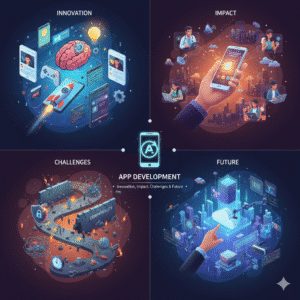
The digital landscape is in perpetual motion, driven by an unceasing wave of innovation in application development. Each day brings forth a plethora of new apps, designed to enhance productivity, streamline communication, entertain, educate, and address a myriad of human needs. This article will delve into the dynamic world of these emerging applications, exploring the forces that propel their creation, their diverse categories, profound impact, and the exciting future they promise.
The relentless March of App Innovation: Drivers and Emerging Categories
The proliferation of new applications is not a random phenomenon but a direct consequence of several interconnected factors. At its core, the exponential advancement in underlying technologies provides the fertile ground for unprecedented app development. The ubiquitous presence of smartphones and other smart devices has cultivated a user base constantly seeking more efficient, engaging, and personalized digital experiences. This demand, coupled with increasingly sophisticated development tools and platforms, empowers innovators to transform complex ideas into accessible, user-friendly applications.
One of the primary drivers is the rapid evolution of artificial intelligence (AI) and machine learning (ML). AI is no longer a futuristic concept but an integral component embedded within a vast array of new apps. From intelligent personal assistants that learn user habits to sophisticated recommendation engines that personalize content feeds, AI-driven apps are becoming indispensable. They power adaptive learning platforms, predictive analytics tools for businesses, and even advanced diagnostic aids in healthcare. The ability of these apps to process vast amounts of data, identify patterns, and make informed decisions elevates their utility far beyond what was previously possible, offering unparalleled levels of automation and personalization.
Another significant catalyst is the ongoing development in augmented reality (AR) and virtual reality (VR). While still maturing, AR/VR technologies are giving rise to immersive applications that redefine interaction and experience. AR apps overlay digital information onto the real world, transforming everything from retail (visualizing furniture in your home before purchase) to education (interactive anatomical models) and gaming. VR, on the other hand, transports users to entirely new digital environments, creating unparalleled experiences in gaming, virtual tours, collaborative workspaces, and even therapeutic applications for mental health. These apps are pushing the boundaries of digital engagement, offering novel ways to learn, work, and play.
The expansion of the Internet of Things (IoT) further fuels app innovation. As more devices become interconnected – from smart home appliances and wearables to industrial sensors – new apps are required to manage, monitor, and extract value from this vast network of data. IoT apps enable users to control their smart homes remotely, track fitness metrics in real-time, optimize energy consumption, and manage complex industrial operations. The seamless integration of physical objects with digital interfaces through these apps is creating smarter environments and more efficient systems, promising a future where our surroundings are intuitively responsive to our needs.
Beyond these technological underpinnings, evolving societal needs and market demands also sculpt the app landscape. The global focus on wellness and mental health, for instance, has spurred a surge in personalized health and fitness apps, mindfulness trackers, and digital therapy platforms. These apps leverage data analytics and behavioral science to offer tailored routines, meditation guides, and cognitive behavioral therapy exercises, making self-care more accessible and personalized. Similarly, the burgeoning creator economy has given birth to a myriad of tools designed to empower independent content creators, from advanced video editing suites to platform-agnostic monetization and community management tools. These apps democratize content creation and distribution, enabling individuals to build and sustain their digital presence with professional-grade capabilities.
Furthermore, sustainability and environmental consciousness are emerging themes driving app development. Apps designed to track carbon footprints, identify sustainable consumer choices, facilitate recycling, or connect users with local environmental initiatives are gaining traction. These applications empower individuals and communities to make more eco-conscious decisions, translating complex environmental data into actionable insights for everyday life. The collective desire for a more sustainable future is thus being channeled into innovative digital solutions.
Impact, Challenges, and The Evolving Future of App Development
The continuous influx of new apps has a profound and multifaceted impact on virtually every aspect of modern life. On an individual level, apps enhance productivity by automating tasks, streamline communication through instant messaging and collaborative platforms, and enrich personal lives with endless entertainment and educational opportunities. They empower individuals with tools for self-improvement, health management, and financial oversight, putting unprecedented control and information at their fingertips. For businesses, new apps are transformational, driving efficiency, enabling new business models, facilitating deeper customer engagement, and providing critical data insights for strategic decision-making. Industries like healthcare, education, retail, and finance are being reshaped by app-driven innovation, leading to more accessible services, personalized experiences, and optimized operations.
However, this rapid evolution is not without its challenges. One of the most significant concerns revolves around data privacy and security. As apps collect increasingly sensitive personal information, ensuring robust data protection mechanisms becomes paramount. Users are rightly concerned about how their data is stored, shared, and utilized, leading to a growing demand for transparent privacy policies and stringent security protocols. The ethical implications of AI-driven apps, particularly concerning bias in algorithms and autonomous decision-making, also require careful consideration and regulatory frameworks to prevent unintended societal harms.
Another challenge is digital fatigue and screen addiction. The constant barrage of notifications and the addictive nature of certain app designs can contribute to mental health issues, reducing attention spans and fostering social isolation. Developers face the delicate balance of creating engaging experiences without inadvertently promoting unhealthy digital habits. Market saturation also poses a significant hurdle; with millions of apps available, standing out in a crowded marketplace requires exceptional innovation, user experience, and effective marketing strategies.
Looking ahead, the future of new apps points towards several key trends. We can expect even greater integration and seamless interoperability between different applications and devices. The vision of a truly interconnected digital ecosystem, where apps communicate effortlessly to provide a holistic user experience, is becoming a reality. Predictive intelligence will become more sophisticated, allowing apps to anticipate user needs and offer solutions proactively rather than reactively. The focus on ethical AI and responsible design will intensify, with an emphasis on creating applications that are inclusive, fair, and beneficial for society as a whole.
Furthermore, accessibility will be a central pillar of app development. Ensuring that applications are usable by individuals with diverse abilities, including those with visual, auditory, cognitive, or motor impairments, will become a standard rather than an afterthought. Cross-platform compatibility will also continue to be crucial, allowing users to transition seamlessly between their smartphones, tablets, smartwatches, and desktop computers without losing continuity. The rise of “super apps” – single applications that consolidate a multitude of services – could also redefine user interaction, offering a centralized hub for various daily needs, from communication and payments to transportation and shopping.
The role of independent developers and small startups will remain vital, driving niche innovations and challenging established players. App stores will continue to evolve, offering better discovery mechanisms, stricter quality controls, and more equitable revenue-sharing models. Ultimately, the future will be defined by apps that not only leverage cutting-edge technology but also demonstrate a deep understanding of human behavior, ethical considerations, and a commitment to solving real-world problems in intuitive and impactful ways.
New apps are continually reshaping our world, driven by technological advancements and evolving human needs. They offer unprecedented convenience, foster connectivity, and unlock new possibilities across industries and personal lives. While challenges such as privacy and digital well-being persist, the future promises an even more integrated, intelligent, and human-centric app landscape, demanding thoughtful innovation and responsible development for continued progress.